Killed in Action near Fléville, Ardennes, France — 8 October 1918
Greenwood Cemetery (WWI Circle), Michigan City, Indiana
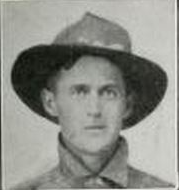
Claude P. Coucher was born on January 8, 1893 in Medaryville, Pulaski County, Indiana, to Albert and Rachael Coucher. His childhood was the kind lived by working families in the early 1900s: moving where the work was, doing whatever kept food on the table. In the 1900 U.S. Federal Census he appears, under the spelling “Cloid Concher,” age 5, living with his parents in Summer Shade, Metcalfe County, Kentucky. A decade later, the 1910 Census shows the same household in Tolono, Champaign County, Illinois, listing him as “Claude Concher,” 19 years old, working as a farm laborer. The spelling changes — Concher, Concher, Coucher — but the people are the same: Albert, Rachael, and their son.
By his early 20s, Claude had settled in Michigan City, Indiana, where he worked at the Indiana Brick Company. He wasn’t a career soldier. He was a laborer. A Midwestern industrial worker who, like so many others, would be sent across the Atlantic in America’s first modern overseas war.
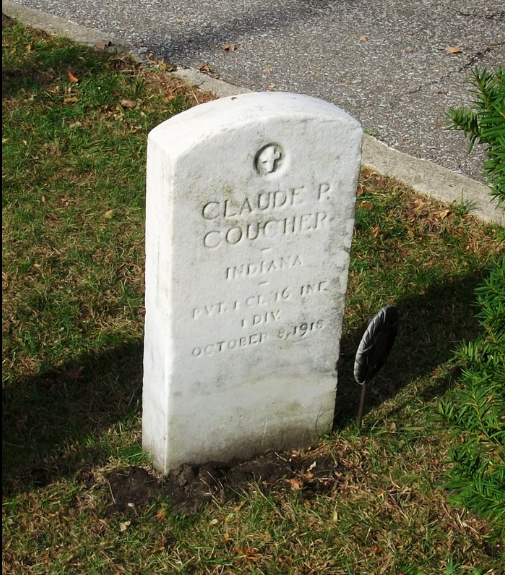
When the United States entered World War I, Claude enlisted in the Indiana National Guard on July 9, 1917. He was assigned to Company G, 1st Infantry (later re-designated the 151st Infantry) and sent to Camp Shelby, Mississippi, for mobilization and training. After the Guard units were federalized and broken up to fill the ranks of front-line divisions, Coucher was transferred into Company B, 16th Infantry Regiment, 1st Infantry Division — the “Big Red One.” He sailed for France on June 11, 1918.
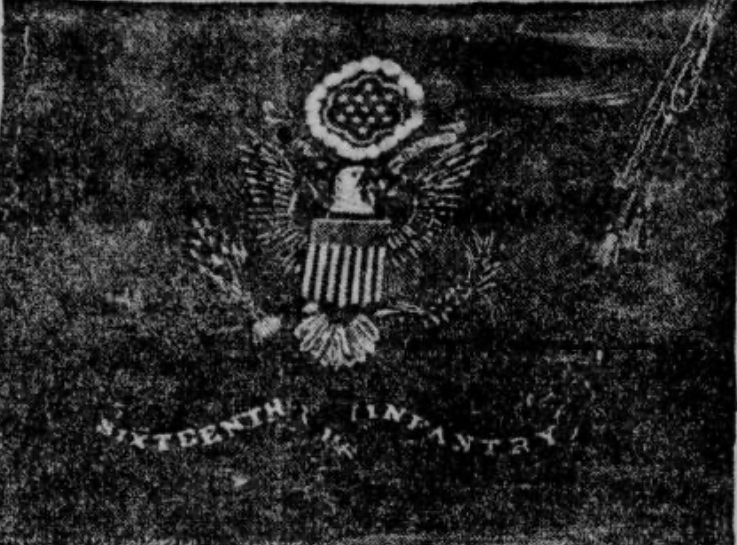
The 16th Infantry was one of the first American regiments to reach France. In July 1917, it famously marched through Paris on Independence Day and saluted the tomb of the Marquis de Lafayette alongside General John J. Pershing. Over the following year, the regiment fought in some of the earliest U.S. actions on the Western Front: holding trenches near Bathélémont, taking losses at Cantigny, and later driving against German positions at Soissons in July 1918 and in the St. Mihiel Offensive in September.
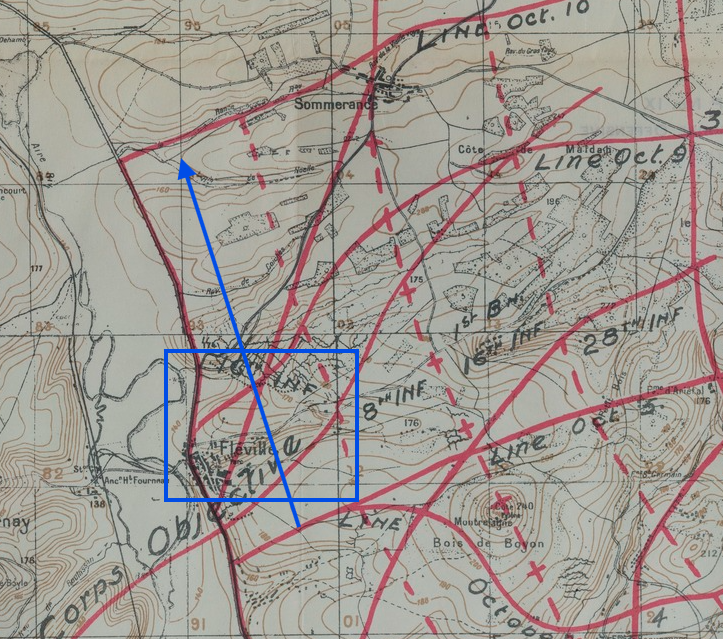
According to his Graves Registration record, Private Claude P. Coucher — Army Serial Number 1564731 — was killed in action on October 8, 1918, near Fléville, in the Ardennes region of France. He was 25 years old. His initial burial was documented down to map coordinates: “Grave 5, Isolated Graves, Commune Fléville, Ardennes, 35 NE E 301.6 N 282.8.” That level of detail means he fell forward, on newly won ground.
The 16th Infantry Regiment suffered catastrophic losses in this phase of the Meuse-Argonne Offensive. In a single day of fighting associated with the push on Fléville, more than a thousand men of the regiment were killed or wounded. Claude was one of them.
After the war, Claude’s name was engraved on First Division memorials in France, including the Buzancy monument honoring those killed or missing in action. Back home, his family made sure he would not remain a name on foreign stone. They brought him home.
Sources (Chicago Style)
- Graves Registration Service Record, File No. 67630. “Coucher, Claud P.” Co. B, 16th Infantry. Killed in action 8 Oct 1918; initial burial “Grave 5, Isolated Graves, Commune Fléville, Ardennes.” Later reburied at the Meuse-Argonne American Cemetery, Romagne-sous-Montfaucon; body disinterred again in 1921 and shipped to Mrs. Rachael Coucher, Michigan City, Indiana.
- Removal Project Information Card (Quartermaster General). Documents disinterment on 22 July 1921; processing at Antwerp; shipment aboard U.S. Army Transport Wheaton to Hoboken, N.J.; and final delivery to Michigan City, Indiana on 15 Sept 1921.
- Indiana Gold Star Honor Roll, 1914–1918, LaPorte County, p. 343. Lists Claude P. Coucher, born 8 Jan 1893 in Medaryville, Indiana; employee of Indiana Brick Company; enlisted 9 July 1917 in the Indiana National Guard; served in Company B, 16th Infantry, 1st Division; killed in action 8 Oct 1918; buried at Fléville, Ardennes, France.
- American War Memorials Overseas, Inc. Entry for “Coucher, Claude P.” Confirms burial in Greenwood Cemetery (WWI Circle), Michigan City, Indiana, and commemoration on First Division monuments in France.
- Find a Grave Memorial (Claude Paul Coucher), Memorial ID 78703333. Greenwood Cemetery, Michigan City, La Porte County, Indiana. Includes current headstone photograph.
- U.S. Federal Census, 1900 (Summer Shade, Metcalfe County, Kentucky) and 1910 (Tolono, Champaign County, Illinois), household of Albert and Rachael Coucher/Concher.
- Harry S. Truman Presidential Library. “Map – 1st Division During the Meuse-Argonne Offensive.” Used to identify the approximate location of Company B, 16th Infantry’s advance and the area where Coucher was killed on 8 October 1918.
- 16th Infantry Regiment, 1st Infantry Division, World War I service summary (regimental history, including Bathélémont, Cantigny, Soissons, St. Mihiel, and Meuse-Argonne). Motto: “No mission too difficult, no sacrifice too great — Duty First.”